Search
Filter dictionary results
59 results for “Car”
Hoses carrying fuel to the fuel injectors in a vehicle
A Carat with a Westy poptop for extra sleeping space and a smaller rear cabinet.
Wires that carry the high-voltage spark from the ignition coil to the spark plugs
A type of independent suspension used on the front axle of a car.
Type of engine used in some VW models, characterized by dual carburetors
Compounds composed of hydrogen and carbon, emitted by vehicles as unburned fuel, contributing to air pollution.
A hose that carries high-pressure refrigerant in the air conditioning system
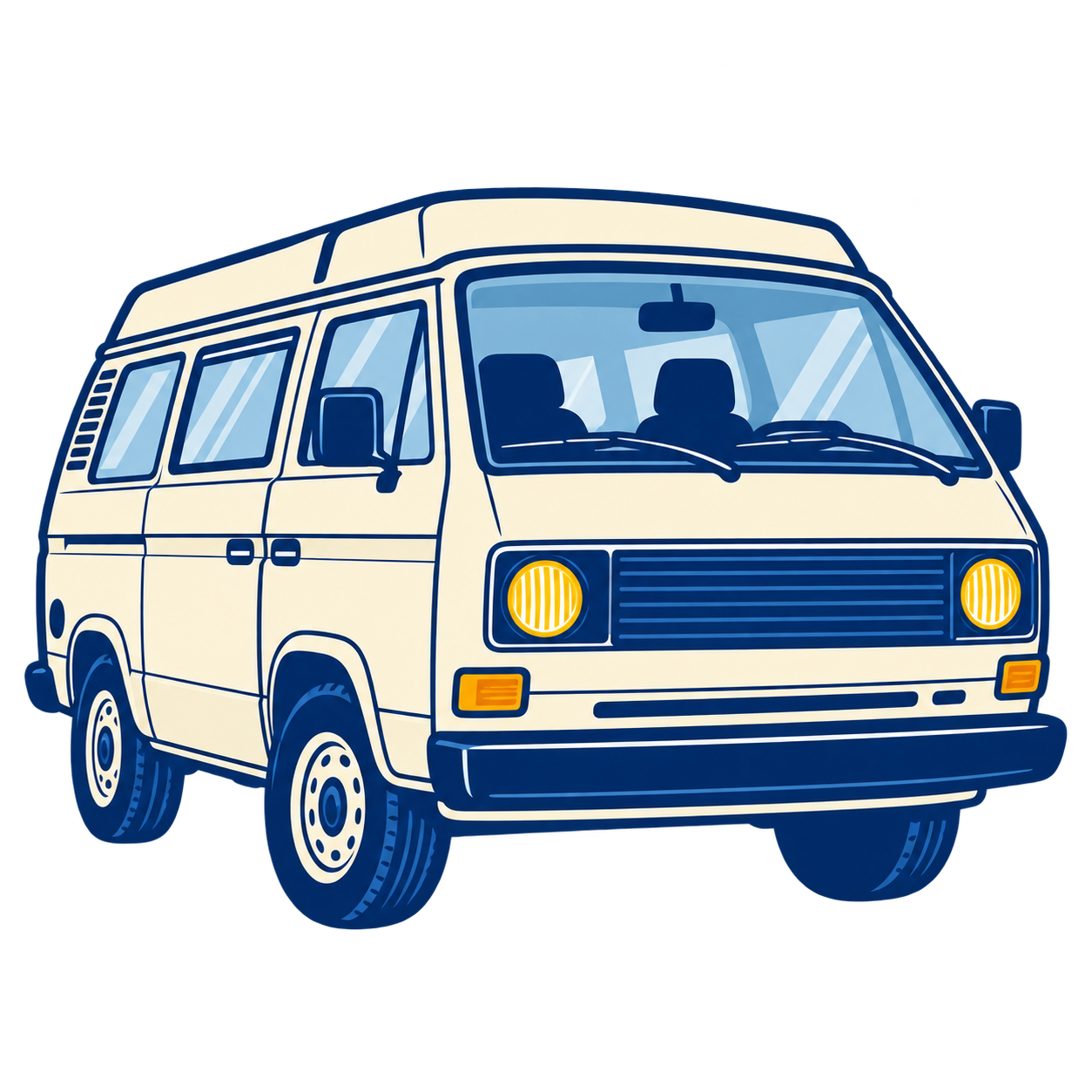
The 3 rd generation of Transporters , from 1980-1991, known in North America as Vanagon , and elsewhere as Caravelle or just Transporter .
Electronic Fuel Injection. Computerized metering and squirting of fuel, replacing the carburetor systems. introduced into the buses in the mid-70's.
Any Volkswagen Transporter from 1980-1991, distinguished by squarer body contours and extremely large windows and windshield. Also known as T3 Transporters , or Caravelle.
The 4 th generation of Transporters , from 1992 to the present, known in North America as the EuroVan , and elsewhere as Caravelle or just Transporter .
A type of rear axle that is 'fixed' at the wheel (that is, it is not able to flex up or down), but is able to move up and down at the transmission end. It required the rear wheels to move in an arc, rather than vertically, when hitting bumps. in some cars (beetles and corvairs and some early porsches), it could cause the wheel to tuck under the car during high speed cornering.
Buses made before mid-1955, whose major characteristics are the oversized engine lid and the lack of a rear cargo hatch. These also did not have the ventilation eyebrow above the windshield/windscreen.
Cold Cranking Amps. a bogus number printed on the sides of automobile batteries to confuse the buyers. generally, the bigger this number is, the easier the battery will crank your car when everything is frozen. assuming everything is in perfect operating condition, of course.
The drain pipe and outlet that carry used sink water out of the camper sink. Some vintage camper layouts discharge through an open outlet rather than a grey-water tank, so the installed arrangement should be checked on the vehicle.
Anti-Locking Braking System. a computerized method of helping to prevent wheel skid/lock-up during braking. it does not prevent spins, nor does it allow you to stop in a shorter distance. it does allow you to steer the car while braking as hard as possible. available as an option on some Vanagons and EuroVans in Europe during the late 1980's-1990's.
An engine that circulates liquid coolant through passages and a radiator to carry heat away. Gerry’s Vanagon spark-plug reference lists DH water-cooled engines with Digijet for 1983–1985 and MV engines with Digifant for 1986–1991. Verify engine code, market, and model year; this archived table is an identification aid, not a complete application chart.
Any Volkswagen Transporter . Since the Beetle was the first car produced by VW, it became known within the company as the Type 1. The bus or transporter was the second type of vehicle produced, so it became known as the Type 2. The Squareback/Fastback was the Type 3, and the 411/412 was the Type 4 (which had the same engine as the 1972-1982 Type 2's ( buses ).
( Constant Velocity Joint ) One of the small circular devices at an end of an axle on a bus . Buses , Vanagons , and EuroVans have four of these, while the Syncro Vanagons have a total of eight. These are necessary to allow the axle to move up and down while still turning to propel the car. the joints need to be keep greased to function properly. when they are worn, they make a knocking-noise that strikes fear into the hearts of bus owners everywhere. Microbuses do not have CV joints, but use a 'swing-axle' and reduction gear box instead.
Gerry community context
Checking Gerry for related public discussions…